Mold Remediation Services in McKinney, TX
Mold remediation in McKinney is about more than wiping a dark spot off a wall. Mold needs moisture, a food source such as drywall, wood or paper, and time. When those conditions stay in place, growth can spread inside a wall cavity, under flooring or above a ceiling long before it is obvious in a room. A careful job therefore starts with the moisture, not just the stain.
Our work covers homes and businesses in McKinney, including properties in Stonebridge Ranch and Eldorado Heights. The scope depends on what is found on site: a small, surface-level patch is a different job from mold hidden behind a bathroom wall after a slow plumbing leak, or growth that followed a roof leak or a flood. We explain what we found, what we plan to remove or clean, and what needs to stay dry before any work starts.
Common Causes of Mold Growth
In McKinney, the causes are usually familiar ones, and often more than one is involved. North Texas summers are humid, air conditioning can create condensation around ducts and vents, and a single storm or plumbing failure can wet materials that are then covered up before they dry.
Common causes include a leaking pipe, water heater or appliance; a roof leak or window leak that lets rain in; poor ventilation in bathrooms, laundry rooms and kitchens; condensation on cold surfaces; flooding or standing water; and a previous water incident that was cleaned on the surface but left moisture inside walls, flooring or insulation. Slab foundations and attic water heaters, both common in the area, can also hide a slow leak: water travels along a slab or through a ceiling cavity and shows up some distance from the source.
Because mold follows moisture, cleaning the visible growth without fixing the cause usually leads to the same problem again. Finding the source is part of the job, even when that means checking an adjacent room, an attic space or the area below a leak.
Mold Testing McKinney TX
Mold testing is sometimes helpful, and sometimes it adds little to what a visual inspection and moisture check already show. When growth is clearly visible and the source is known, the practical next step is usually to fix the source, contain the area, and remove or clean the affected material.
Testing can be more useful when a musty odor is present but no growth is visible, when the extent of hidden growth is unclear, when a property is being bought or sold and an independent record is wanted, or when previous cleaning has not solved a recurring problem. In those cases, sampling may include air or surface samples, and the results need to be interpreted alongside the inspection findings: a sample on its own does not identify the moisture source or the full extent of growth.
We do not present a visual check as a laboratory result. If sampling is discussed, we will explain what kind of sample is being proposed, what it can and cannot show, and what happens with the result, so you can decide whether it is worth doing for your situation.
Mold Inspection McKinney
A mold inspection looks for both the growth and the conditions that allowed it. It usually starts with questions about leaks, floods, odors, recent repairs and when the problem was first noticed. The affected rooms are then examined for staining, discoloration, peeling paint, warped flooring, swollen baseboards and soft or damaged drywall.
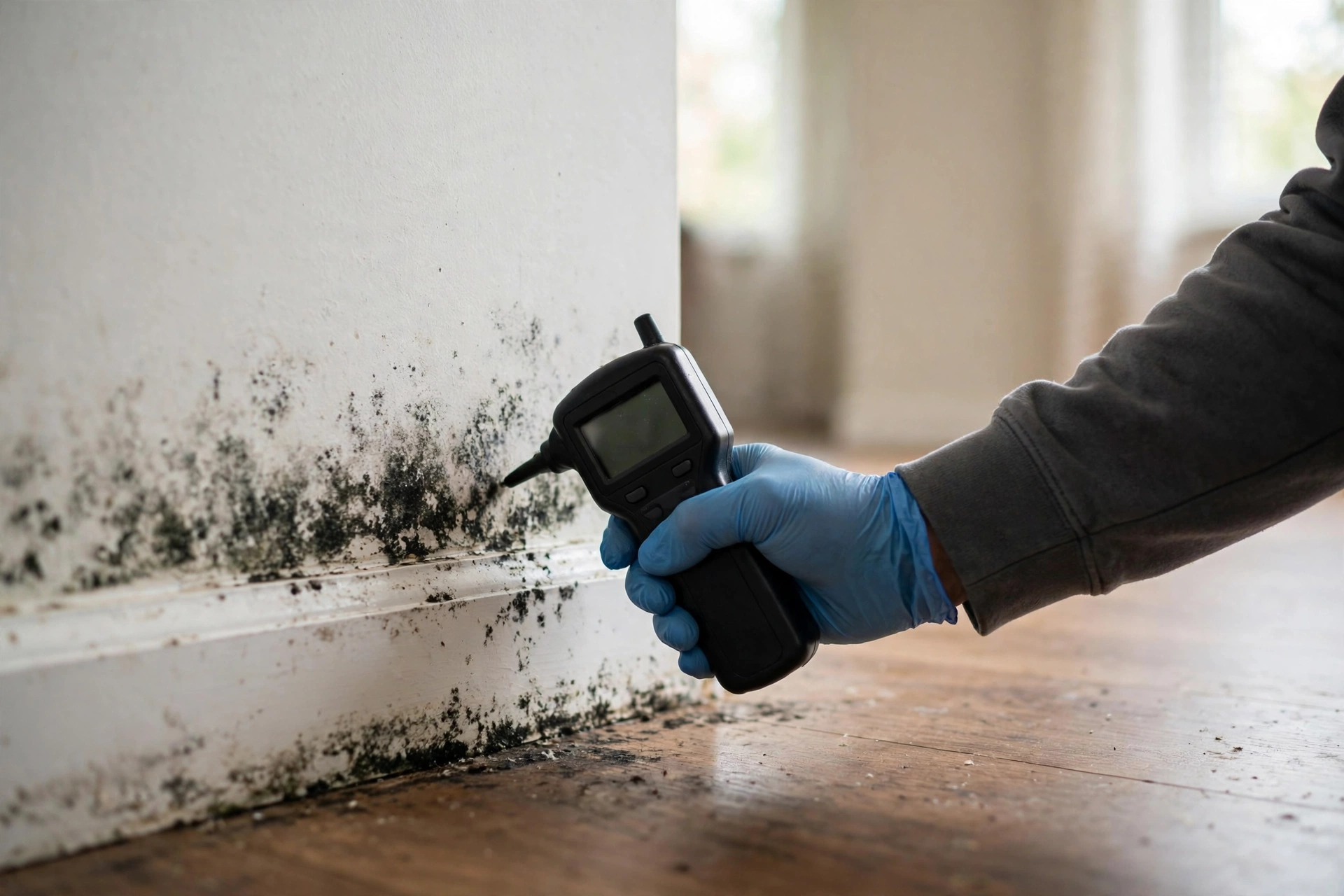
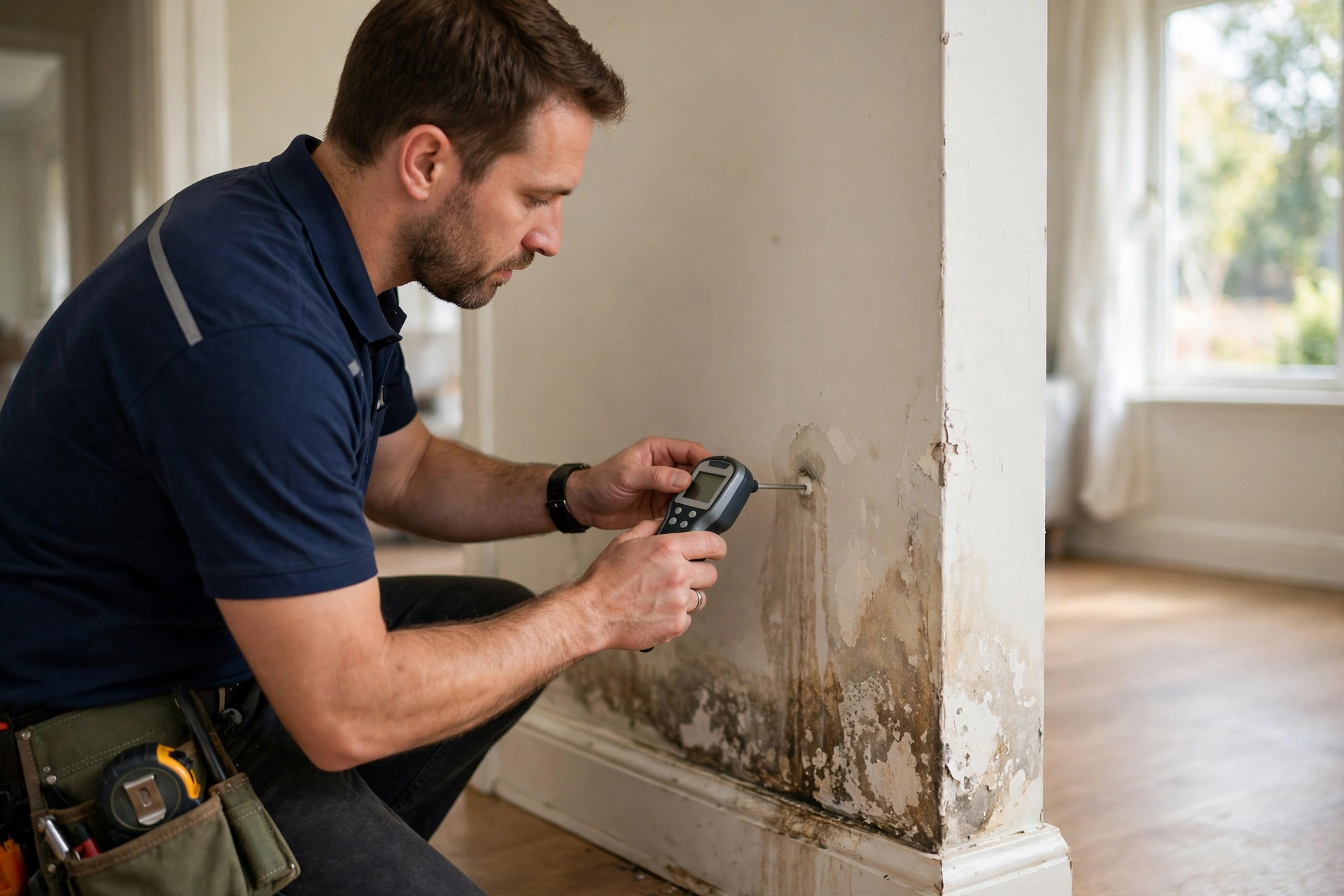
Moisture checks are part of the same visit. A moisture meter can help identify damp materials that look dry on the surface, including wall edges, flooring, cabinets and ceiling areas below a leak. The inspection also considers where water may have travelled, because mold is often found away from the original leak. If growth may be inside a wall or ceiling, or near heating and cooling equipment, that is noted rather than guessed at, and the next step is discussed with you before anything is opened up.
You should receive a clear explanation of what was found, which areas need attention, and whether water damage cleanup, drying, material removal or repairs may also be needed. An inspection that only names a room and a price, without explaining the moisture source, is not enough to plan the work.
Mold Removal and Remediation Process
Every property is different, but a typical mold remediation in McKinney follows the same sequence. The order matters: removing growth before the area is contained, or before the moisture source is addressed, can spread spores to clean rooms.
1. Find the moisture source
The source is identified as far as possible, whether it is a plumbing leak, roof leak, condensation problem or drainage issue. Work on the growth alone, without a plan for the source, is likely to be repeated.
2. Inspect and plan the scope
Affected rooms and materials are assessed, including hidden areas where moisture may have travelled. The plan covers what will be contained, what will be removed, what can be cleaned, and what will be dried and checked again.
3. Contain the work area
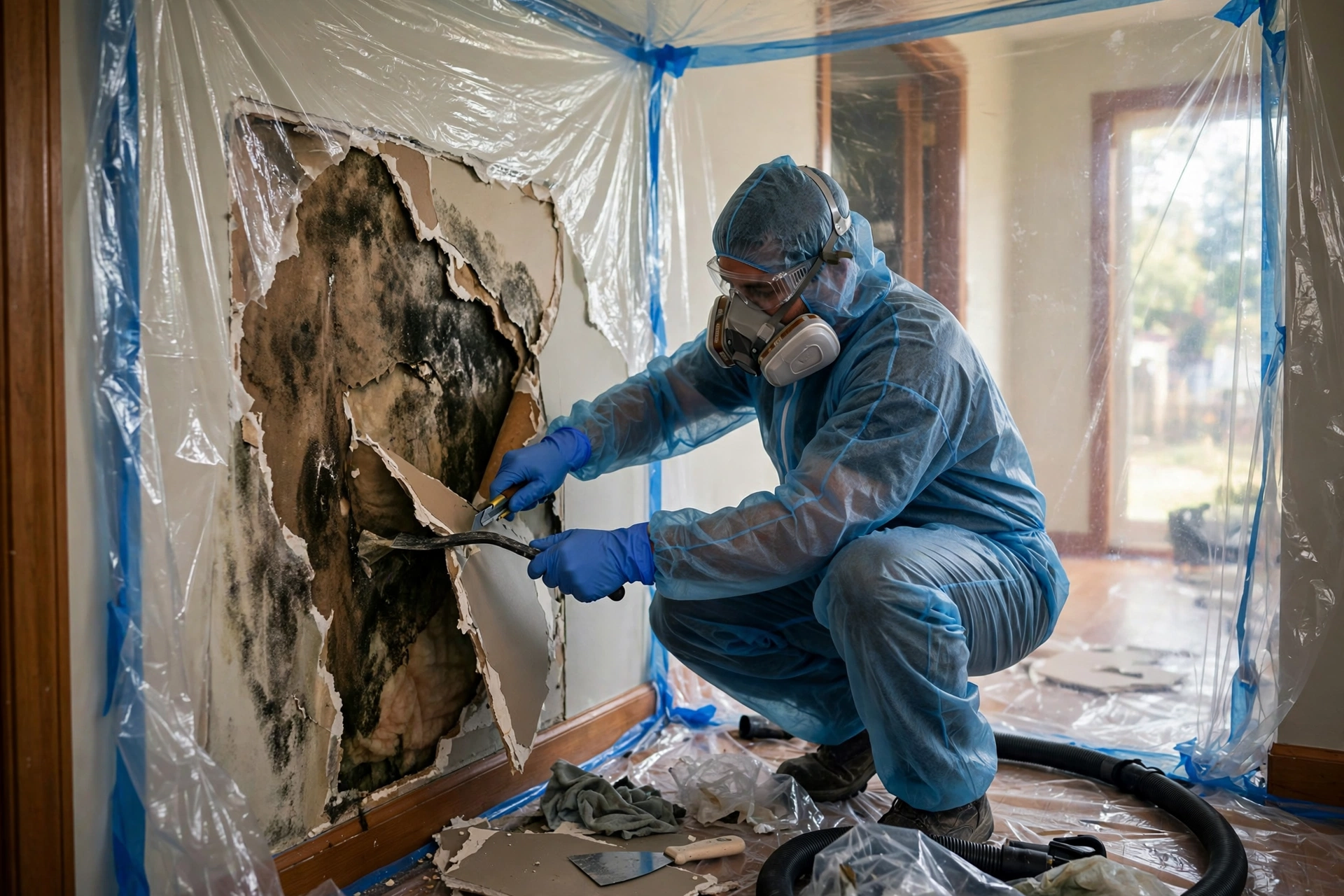
The affected area is separated from the rest of the property where practical, to limit the spread of dust and spores during removal and cleaning. Furnishings and belongings in the work area are protected or moved, and the work area is kept tidy as the job progresses.
4. Remove or clean affected materials
Porous materials that are heavily affected, such as some drywall and insulation, usually need to be removed rather than cleaned, because growth can be inside the material itself. Hard, non-porous surfaces can often be cleaned. Materials are handled carefully and removed from the property in a way that does not spread them through clean rooms.
5. Clean, dry and check again
After removal, remaining surfaces are cleaned and the area is dried. Moisture checks help confirm that materials are dry before repairs or refinishing begin. Rushing this step, or covering damp materials with new drywall and paint, is a common reason mold returns.
6. Plan repairs and prevention
Once the area is dry, repairs can be planned, whether that is replacing drywall, fixing a leak, improving ventilation in a bathroom, or addressing condensation around a duct. The aim is to leave the property not only cleaner, but drier and less likely to support growth again.
Connection Between Water Damage and Mold
Almost every mold job in McKinney has a water story behind it. A burst pipe, a leaking water heater, a roof leak in a storm, an overflowing appliance or a flood can wet drywall, insulation, wood and flooring. If those materials stay damp, mold can start to grow quickly, often within a day or two, and continue to spread while the moisture remains.
This is why timing matters after a water incident. Water extraction and drying should not wait for visible mold, and visible mold should not be treated as a separate, cosmetic problem while the original water damage is still wet. If you have had a leak or flood, it is worth having moisture checked even after surfaces look dry, because water can remain in wall cavities, under flooring and inside cabinets. A water damage inspection after an incident can help decide whether water mitigation and drying are needed before mold has a chance to establish itself.
Signs That You May Have a Mold Problem
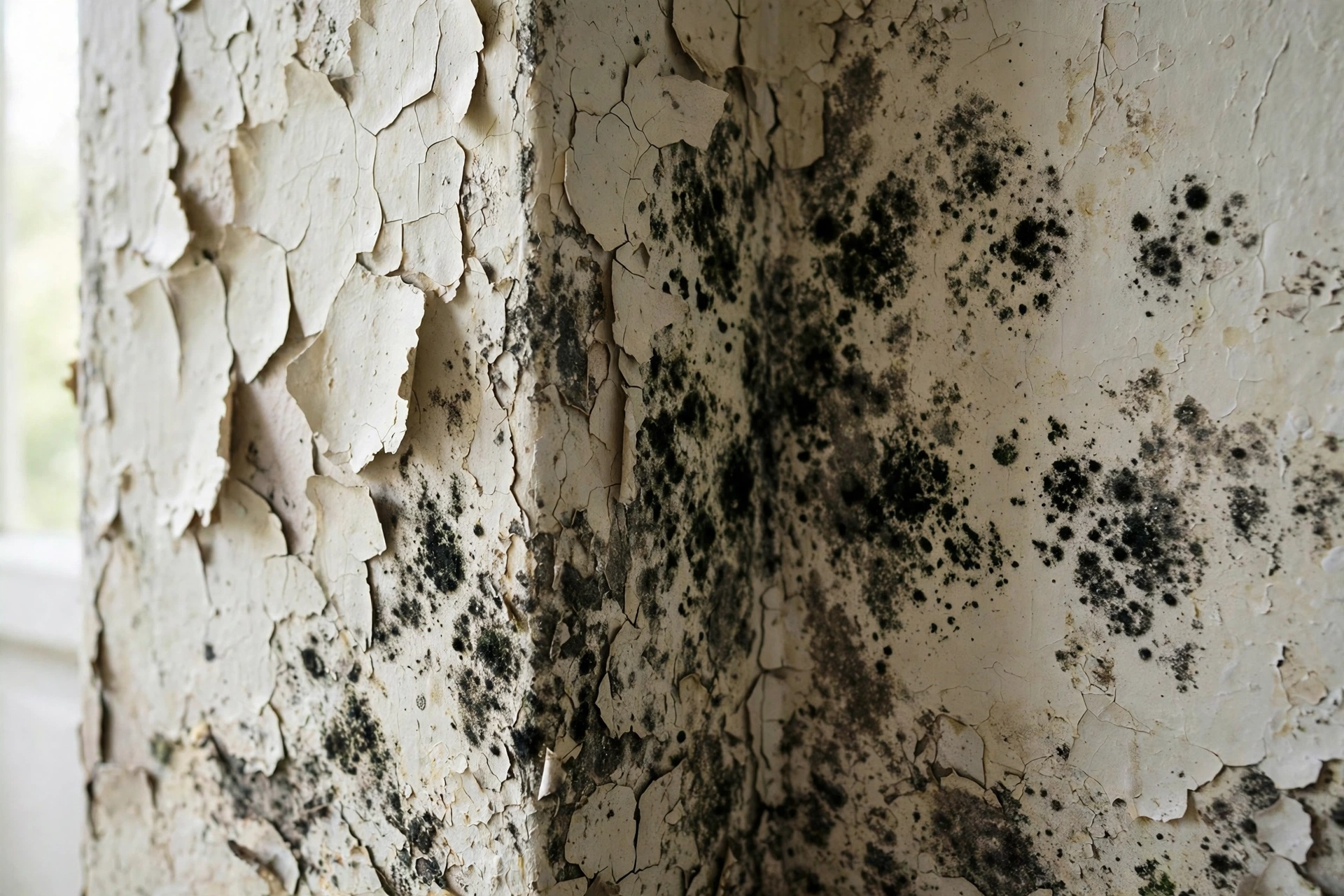
Mold is not always visible, so the signs are often indirect. Look for a musty or earthy odor that does not go away after cleaning, dark or discolored spots on walls, ceilings or grout, paint that bubbles or peels, wallpaper that lifts, warped flooring, swollen baseboards, or damp spots that keep returning in the same place.
Other clues include condensation that is always present on windows or ducts, a history of leaks or floods in the property, or a room that feels damp even when it has not rained recently. In some homes, the first sign is in an attic, a closet against an exterior wall, under a sink, or behind a washing machine, where a slow leak has gone unnoticed. If you notice any of these signs after a water incident, it is worth having the area checked rather than painting over it.
When to Contact a Professional
Contact a professional when the affected area is large, when mold is hidden inside walls, ceilings or flooring, when it returns after cleaning, when it follows sewage or flooding, when it is in heating and cooling equipment, or when anyone in the home has a health concern that makes exposure a worry. In those cases, disturbing the area without containment can make the problem worse.
Also seek help if you cannot find the moisture source, if the property has had repeated leaks, or if you need a clear plan for removal, drying and repair rather than a quick clean. If water is still entering the property, stopping the source safely comes first. If water may be contaminated, or is near electrical systems, keep clear and ask for advice before entering the area.
Mold Remediation FAQs in McKinney
How do I know if I have mold or just a stain?
A stain alone does not confirm mold, and mold is not always visible. A musty odor, discoloration that returns after cleaning, or staining that appeared after a leak or flood are reasons to have the area and the moisture behind it checked before assuming it is only cosmetic.
Do I need mold testing in McKinney?
Testing is not needed in every case. When mold is clearly visible and the moisture source is known, the priority is usually fixing the source, removing affected material and drying the area. Testing can be useful when mold is suspected but hidden, when the extent is unclear, or when an independent record is needed. We will explain what a test can and cannot show in your situation before any sampling is discussed.
Can I clean a small patch of mold myself?
A small, surface-level patch on a hard, non-porous surface can sometimes be cleaned with household methods, but only if the area is dry, the source is fixed and no one in the home has a health concern that makes exposure risky. Do not disturb a large area, mold inside walls or ceilings, mold after sewage or flooding, or mold in heating and cooling systems, as that can spread spores and make the problem harder to contain.
How long does mold remediation take?
It depends on the size of the affected area, whether mold is hidden inside walls or ceilings, how wet the materials are, and what needs to be removed rather than cleaned. A small, accessible job may be completed in a day, while a larger or hidden job takes longer, and drying is a separate step that should not be rushed. The scope should be explained after an on-site assessment, not promised over the phone.
Will mold come back after remediation?
Mold can return if the moisture problem that caused it is not fixed. That is why remediation should include finding the leak, condensation or drainage issue, drying the affected materials and checking the area again, rather than only cleaning what is visible. Ongoing ventilation, prompt repair of leaks and attention to damp areas help reduce the chance of it returning.
Is mold remediation the same as water damage cleanup?
They are related but not the same job. Water damage cleanup focuses on removing water, cleaning affected surfaces and drying a property. Mold remediation focuses on identifying mold growth, containing the work area, removing or cleaning affected materials, and addressing the moisture that allowed mold to grow. Many properties need both, in that order.
Related Water Damage Services in McKinney
Mold rarely appears on its own. Depending on what caused it, you may also need water damage inspection, emergency water extraction, water damage cleanup, water mitigation, flood damage restoration, sewage cleanup, water damaged ceiling repair or storm damage cleanup. Visit the homepage to learn more about services available in McKinney.
Request Help in McKinney, TX
If you have noticed mold, a musty odor or damp materials after a leak or flood, contact our team to discuss the situation. A clear assessment can help you understand what is affected, what the moisture source may be, and what work may be appropriate.